How I Learned to Analyze Stocks — And Why Existing Tools Kept Failing Me

I tried Yahoo Finance, Seeking Alpha, TradingView, and more while learning stock analysis—until the workflow broke. Here’s what I learned and why I built my own tool.
My Investment Journey (And Why I Eventually Built My Own Tool)
I started the same way most people do.
I Googled “how to do stock analysis.”
I clicked the first few results on Google’s first page. Read through them quickly. Didn’t really know what I was looking for—so I didn’t question whether any of them were good or bad. At that point, everything sounded equally credible because I didn’t yet have the context to know otherwise.
Naturally, I ended up on Yahoo Finance. Like everyone else.
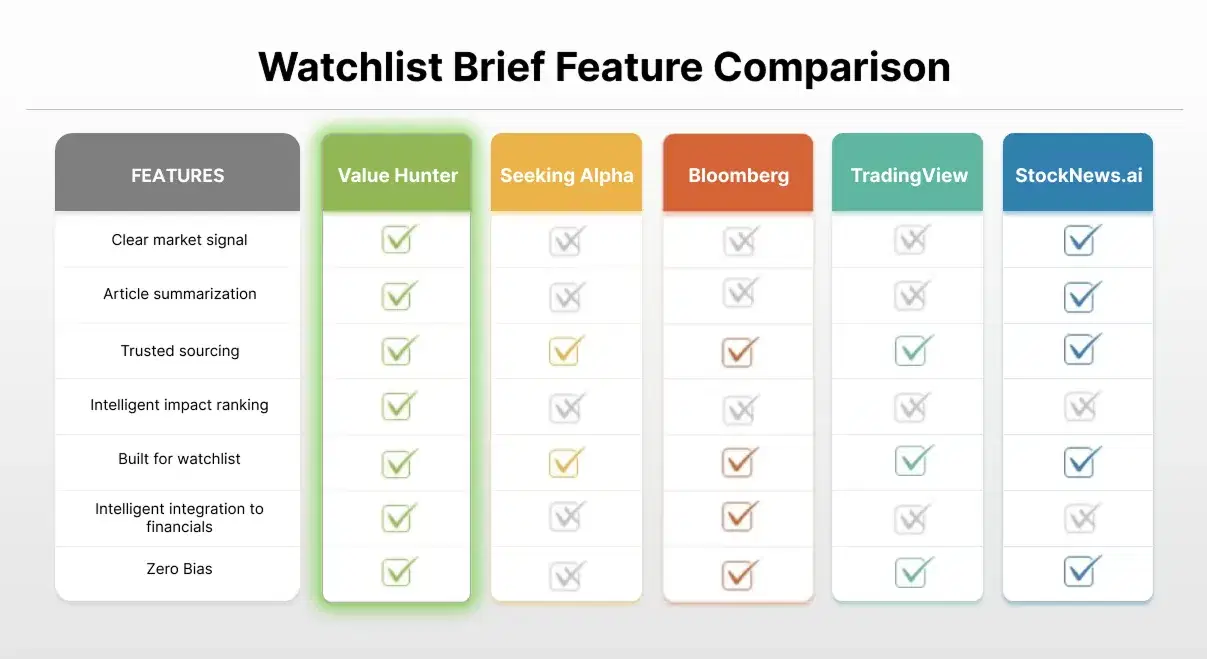
This isn't a comparison of stock research tools. It's a story of how my investing workflow repeatedly broke and what I learned trying to fix it
I looked at historical charts. Earnings numbers. Revenue, which made sense. EBITDA… not so much. I’d Google individual terms one by one, but even then, it never really clicked. I could understand definitions in isolation, but I couldn’t connect them to what actually mattered: how those numbers translated into stock price movement.
“High is good, low is bad” only gets you so far.
Because context changes everything.
Low profit is bad… unless you’re a fast-growing startup reinvesting aggressively. Negative earnings are scary… unless revenue is compounding at 20x and the business is deliberately sacrificing margins to scale. PLTR, TSLA or CRWV to name a few are core examples where traditional rules feel incomplete.
That’s when I realized something important about myself:
I don’t learn well through abstraction. I learn through practical translation—understanding what this means in the real world, not just what it means on paper.
Pursuit #1: Depth, But Always Feeling Late
Eventually, I landed on Seeking Alpha.
At the time, it felt like the right step up. Simply Wall Street felt too technical for where I was, and Seeking Alpha gave me more depth, more narrative, more explanation. I still didn’t fully understand all the jargon, but at least I felt like I was learning.
Then the first real frustration hit.
I always felt late.
Whenever something meaningful happened—earnings surprises, strategic shifts, unexpected announcements—I’d find out after the fact. I was always waiting for someone to write about it before I could understand it. And that delay mattered.
Looking back, this was probably the moment I started becoming a more serious investor.
Not because I suddenly knew more—but because I became aware of my limitations and started actively searching for ways to remove them.
So I compensated.
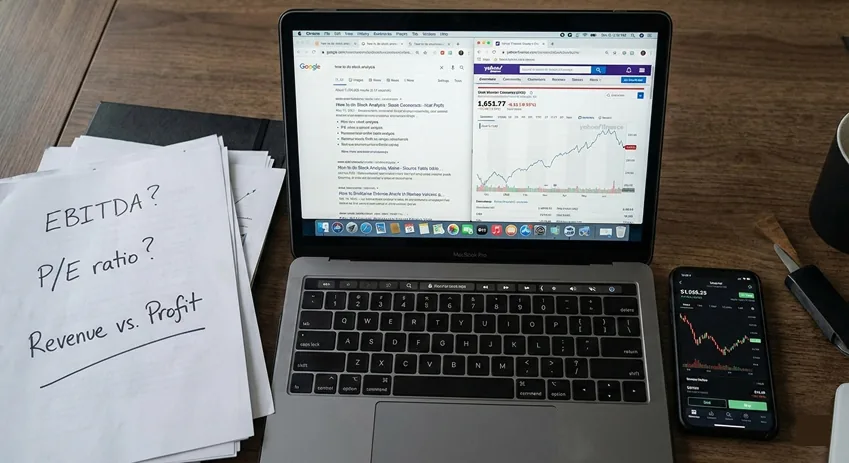
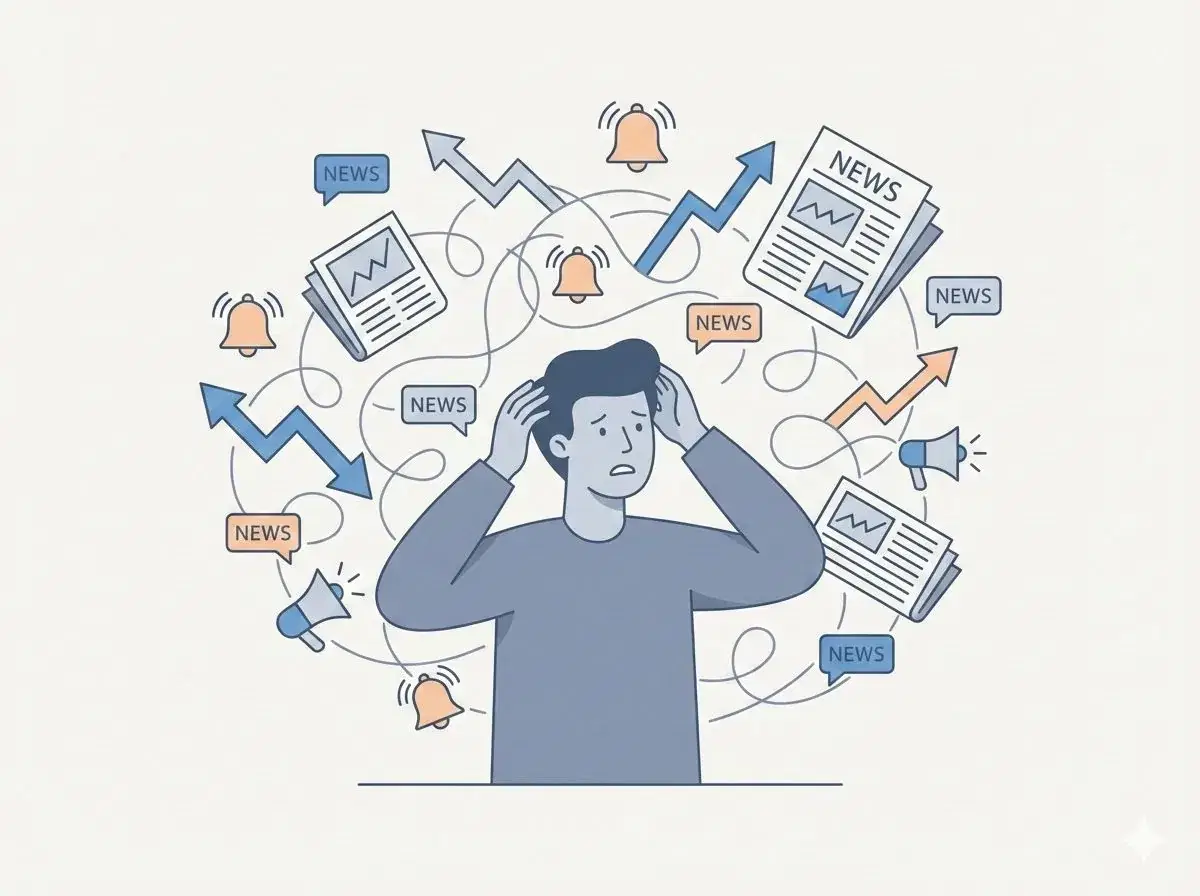
I Googled individual stocks constantly. I kept Yahoo Finance open. My brokerage app was always open too—not because I was actively trading, but because I liked watching my portfolio move. Seeing the dollar amount go up (or down) kept me engaged. And more importantly, I wanted to be ready to act quickly when big news dropped.
Seeking Alpha stayed open too… even though updates weren’t frequent.
Every morning became routine:
- Check pre-market movers
- Look at U.S. futures
- Scan for unusual price action
If something moved unexpectedly—or earnings dropped—I’d go straight to Google.
And that’s when the real grind started.
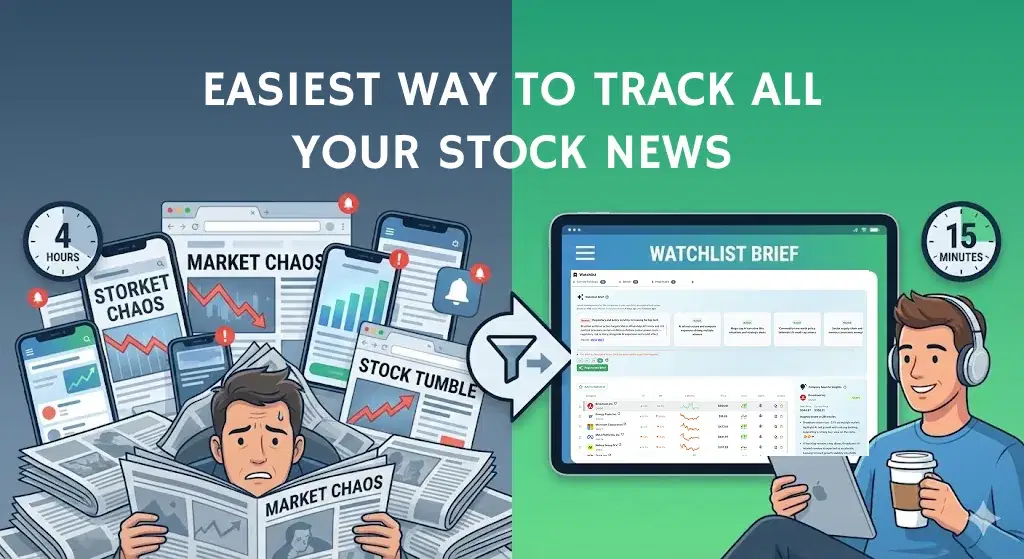
Reading through article after article, trying to figure out what actually happened. Half the time they were opinion pieces. The other half weren’t even the latest news I was looking for. Once I finally understood the catalyst, I’d repeat the same process for the next stock.
[Ticker] latest news → read → filter → repeat
Over time, this created an unintended constraint:
I started shrinking my portfolio, not because I wanted to—but because it was the only way to keep research manageable.
I knew this wasn’t sustainable.
So I moved on to the next pursuit.
Pursuit #2: More Knowledge, More Complexity
Earlier in my career, I worked in finance under the bank’s investment branch. That’s where I first encountered the Bloomberg Terminal.
Yes—that Bloomberg.
I didn’t have my own terminal, so I’d hover around the sign-out sheet, squeezing in as much learning time as I could. Around this same period, my interests began shifting. I started becoming more curious about trading, not just long-term investing.
Charts pulled me in.
I started noticing correlations (simple and obvious ones looking back at it). How indexes and individual stocks often moved together unless something company-specific broke the pattern. Nothing mindblowing I know.. but the more I stared at charts, the more patterns emerged.
Stocks trending within ranges. Prices repeatedly testing certain levels. Double bottoms. Double tops. Eventually I learned the language: support, resistance, wedges, cup-and-handle formations and more.
As my pattern recognition improved, something else became obvious.
Opportunities don’t show up on the same ticker every time.
They appear across many tickers.
Which meant I needed a broader watchlist.
And that brought me straight back to my original problem:
More tickers = more news = more time spent researching.
That’s when I found TradingView.
And honestly - at this stage of my learning it felt like progress!
The charting was excellent (and still is). The integrated news per ticker felt like a breakthrough. For the first time, charts and news lived in the same place. It felt like everything I needed.
But over time, the cracks showed.
TradingView’s news coverage is… thin.
You get headlines. Click into them. And what you often get is a slightly longer version of the title—without real depth or detail. When a headline mattered, I’d still end up back on Google, searching for the full story.
It reduced some friction—but not enough.
It still required multiple steps. Multiple tools. Constant context switching.
I knew this still wasn’t the answer.
Pursuit #3: When the Tool Didn’t Exist
I kept searching.
I came across tools like MarketFlux, but the moment I saw that one of their data source was Twitter (now X), I closed the tab. I wasn’t looking for noise. I needed signal.
Around this time, something else was happening in parallel.
I was shifting careers.
I fell in love with technology—something that had always been there, quietly, since childhood. From tinkering with the command prompt on Windows 98, to building a calculator and a simple game in high school computer science class.
Working in tech changed how I saw problems.
I started understanding what was actually feasible to build.
And that’s when the thought hit me:

"What if the tool I’m looking for just… doesn’t exist?"
"And if it doesn’t—why not try to build it?"
At first, I thought I could do it alone. That idea didn’t last long. The problem was bigger than I realized—borderline impossible solo.
So I partnered with my best friend, Krasi.
Together, we set out to solve the exact problems we had lived through.
That’s how ValueHunter was born.
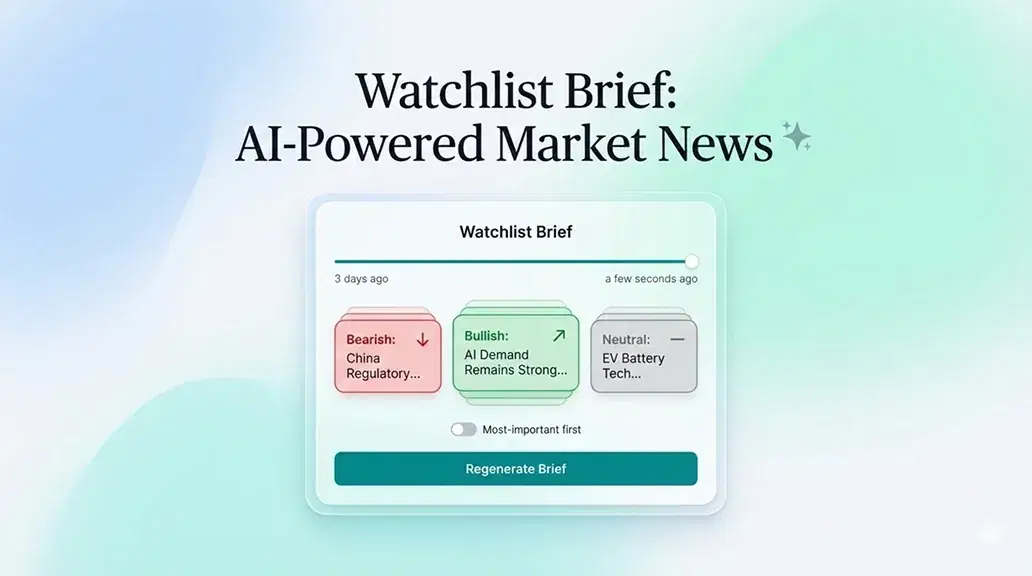
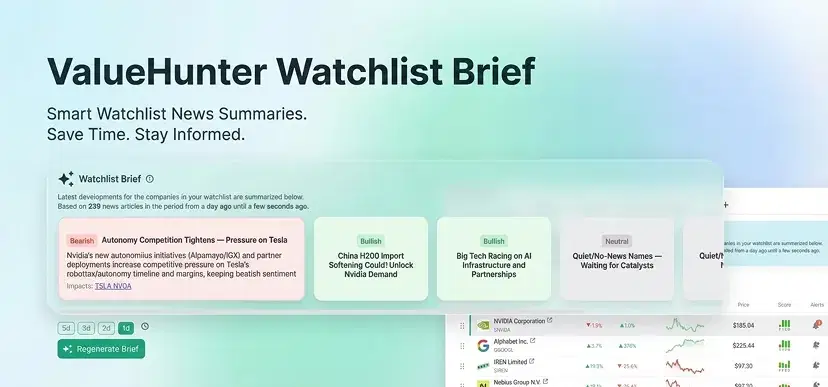
And more specifically, that’s how Watchlist Brief came to life.
We didn’t design it around features.
We designed it around workflow.
Instead of forcing investors to adapt to fragmented tools, we built something that adapts to how investors actually think and work. One place. One daily briefing. Only the news that matters—mapped directly to the tickers you care about.
Watchlist Brief didn’t just save time.
It removed cognitive overload.
It restored context.
It finally let the tools fit me—not the other way around.
And it all started from the same place most people do.
A Google search.
A few open tabs.
And the feeling that there had to be a better way.
If you are curious about what we've ended up building to fix this workflow problem, check it out here